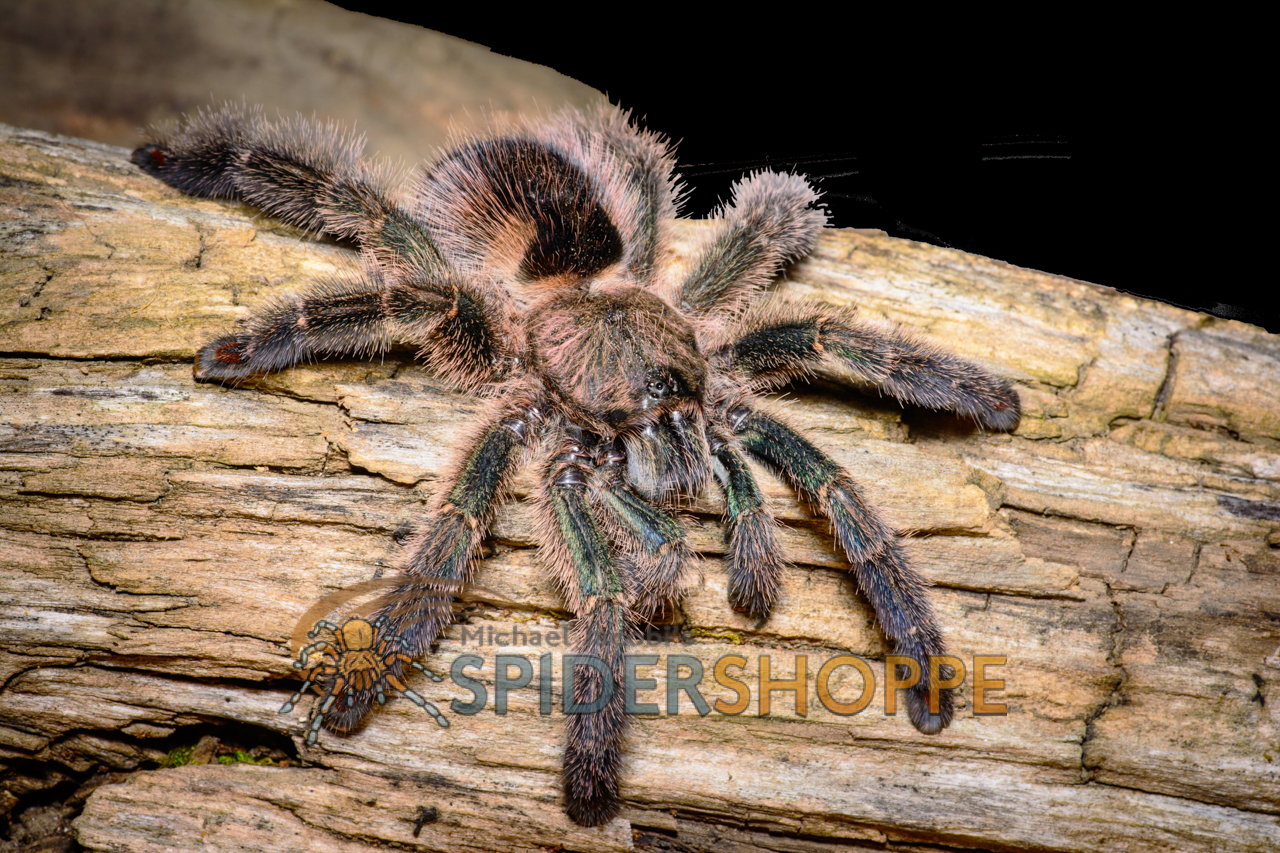
Showing posts with label Avicularia. Show all posts

Tuesday, February 23, 2016

#106 - POPPIN' IN

How y'all been? Sorry I haven't been out to play much lately. Thought I'd pop in and give you a life dump. My quietness is partially because I was on the road for 23 nights in February. I know most of you don't give a shit about my gun stuff and that's all I was up to. I have another blog for that. However, it was one hell of a scenic road trip so I hope many of you have been following my @exoticfauna Instagram. I posted loads of pix from my 5000 mile epic road trip.

Even in retirement I still have some involvement in arachnoculture. As you know, that is primarily through The British Tarantula Society, which I encourage you all - once again - to become a member of. Welcome to new or renewing American members including John Apple, Frank Somma and my bonus dad Joel Greenblatt. The budget option is online Journal only, but if you can swing the $55 or so you can also get three print issues sent to your home that are edited and produced by yours truly. I am happy to report that I am tonight putting the finishing touches on my first issue as Editor - 31(1) March 2016. One of the articles features Heteropoda and is co-authored by Tom Patterson and I.

Before I leave the subject of the BTS I must add that I leave Sunday for the Annual Lectures. I'm not speaking this year and have Joel with me so I'll be able to chill and really enjoy the weekend's festivities. The night before drinks is always a meeting of the minds when it comes to world tarantulaculture, and the Lectures never disappoint. Then Sunday we have our Committee Meeting, which is the Annual General Meeting and is open to the membership at large. Joel and I are stopping in Dublin before we get to Bristol and I'll revisit both Guinness and the home of my tipple – Jameson's Distillery. Then it's off to Bristol and Serious Ink. Mark will be finishing my right sleeve while his apprentice daughter Brandon recolors the Encyocratella olivacea tattoo that's on the inside of my right calf. Day trips to Wales and London will follow before the weekend and the Lecture arrives.

Now that I don't use Faffbook (full disclosure: I actually do have a page for my new business and the necessary personal account to maintain it, but that is the account's sole purpose and I am not accepting/seeking friends. Sorry), I am posting pix to Instagram and also maintaining my high resolution galleries at SmugMug. I hope you visit my SmugMug account every now and again. You can even order prints if you choose to hang my photography on your wall.

Screen cap of my Tarantula in Terrarium gallery at SmugMug. 152 photos and counting ...


I've also recently updated my The Tarantula Bibliography a few times for February. The revision co-authored by Andrew M. Smith and I resulted in numerous changes, but nothing compared to the complete United States Aphonopelma revision published by friends Chris Hamilton and Brent Hendrixon along with Jason Bond. Plus there are a couple of miscellaneous new genera like Bistriopelma and Neoholothele.

Although I still keep and will breed Harpactira pulchripes, Monocentropus balfouri and Poecilotheria subfusca, the two final never-been-bred-yet projects are "Monocentropus lambertoni" and Avicularia sooretama. I recently posted pix of the adult pair of A. sooretama on IG and SmugMug and will also share below.

Adult female Avicularia sooretama. © Michael Jacobi
Mature male Avicularia sooretama. © Michael Jacobi

Anyone who has ready any of my articles on arboreal tarantula husbandry - in print or online - or even that has followed Kiss My Big Hairy Spider is well aware that I often use a "breeding area" type of set up to pair both theraphosids and araneomorphs. Much of this technique has been devoted to the mass production of Avicularia and Poecilotheria over the years. The adults are housed in customized cereal containers or gallon jars depending on size and gender. Once it's time for the spiders to bump uglies both individual containers are placed inside a much larger tub. Generally, I allow them to settle in and feed and then only release the male so he can sniff about for a few days unmolested. The female is then fed again and extra food left in the breeding arena. A day or two later I open her enclosure too. They are free to mix and mingle as their schedule allows.

In the case of the pair of Avicularia sooretama, the male stayed in his gallon jar too long and had to be coaxed out. He then had free run of the place for a week or so. Even before I opened the female's nano ExoTerra terrarium I knew that she wasn't likely to leave her home. She has a very thick and secure tube sock in her terrarium and there's no reason for her to roam. I eventually tickled her out and removed both enclosures from the large "breeding arena" tub. I placed the live plant and cork bark pieces from the female's terrarium in one corner and put the terrarium light on the top of the breeding tub once I shut the lid. Then I remembered that I had a tub of terrarium plants in my living room that were removed from the enclosures of spiders long sold. I had a big tub of plants being rehabilitated a bit for possible reuse. So I decided I would just put them all in the "breeding arena" and the pair would end up with a communal mansion of sorts. That is where they remain.

The "breeding arena" A. sooretama mansion with two ExoTerra lamp fixtures.

The male likes to sit up here.

Inside. It's hard to see the cork in the back right corner, but that is where the female has built a new tube sock.

Close-up of the male Avicularia sooretama.

As for the other project – "Monocentropus lambertoni" – I should remind you that in an article in the BTS Journal two issues or so ago I questioned the validity of the ID of our hobby spider. Hence, the quotation marks. Regardless, I had a very rare male mature, and he bred with my only female many times. Unfortunately, she subsequently molted. However, the male is still alive even though he matured last May. He has successfully mated with her several more times, and I will try him again over the next few days. Sadly, he is destined for a spirit jar living on a shelf in England. I want this spider identified and he will be donated to African Theraphosidae specialist Richard Gallon. So, live or dead, he is traveling to Bristol with me. It is an easy decision to make only because I have a penultimate male here. If the mature male did not successfully transfer sperm at least I have a backup.


Well, that's it for now. Glad we could chat again. Please check out my @exoticfauna Instagram. There are loads of pix from Costa Rica, my road trip (Arches N.P., Grand Canyon N.P., Red Rock S.P./Sedona AZ, etc.), and starting Sunday there will be loads from my trip to the UK. I've lost count of how many times I've travelled to the UK since my first in 2006 - I think this will be 8 or 9? Bristol is my home away from home and the location of me mate Mark Pennell and his Serious Ink Tattoo Studio. Fucking stoked.

All the best, MJ

Saturday, September 5, 2015

#68 - TALES FROM THE FIELD #13


Let's return to Suriname ...

As I've written, our field trip to this former Dutch colony on the northeast coast of South America was due to Maria Sibylla Merian's pioneering journey there in 1699. She was fascinated by insects, especially the then unknown metamorphosis of butterflies. An accomplished illustrator, Madame Merian left us with the first depiction of a "bird-eating" tarantula and this led to Linnaeus' Avicularia avicularia.

In Blog #49 back in late July I told her tale and of our journey to a restored plantation where we found the first of many Avics of our Suriname adventure. This plantation was on the north side of the Commewijne River east of Paramaribo, the capitol of Suriname and port on its northern coast. Although our day on the plantation yielded a large number of Avicularia, we still had a desire to find one within Paramaribo's "city limits". Over half of Suriname's population lives in "Parbo", and we knew for sure that Merian would have started where her ship had landed.

Prior to our field trip a Dutch team that had visited Suriname some years earlier had corresponded with Andrew Smith. They told of finding Avicularia in the forest near Parbo's zoo. So one day during our first week before we headed south to Babunhol and Brownsberg we decided to visit what would prove to be a very dismal little zoo.

The zoo itself is on the northwest side of the city and as we pulled up to its parking lot we noticed it was surrounded by a beautiful forest. We presumed this is the place the Dutch men had suggested. We decided that exploring the trees in this area would be better than a trip into the zoo and disappeared into the foliage.

As we searched the forest I discovered my first Plica lizards. These well camouflaged saurians cling to the trunks of trees and, much like our American Sceloporus, will tend to circle away from you and ascend at the same time when they know they are spotted. But many proved to be great models and would freeze still for my photo shoot, confident in their splendid camouflage. As I searched the trees for arboreal spiders I also came across turnip-tailed geckos (Thecadactylus rapicauda).

The rainforest beside the zoo where we explored.  © Michael Jacobi
Plica umbra in Paramaribo, Suriname  © Michael Jacobi
You can see how perfectly the turnip-tailed gecko (Thecadactylus rapicauda) also blended in with the rainforest trees.

My mate Paul Carpenter is highly skilled at shining his "torch" (flashlight) in the right place. He's hunted spiders around the world so this wasn't his first rodeo. It was he who discovered our first theraphosid spider, but to our surprise it wasn't Avicularia. And, SPOILER ALERT, we would find zero Avicularia in the woods surrounding the zoo. As Paul's light rays penetrated a natural hole at the end of a small limb he discovered our first Tapinauchenius plumpipes.
Out of this hollow tree limb came our first Tap.
The team at the small tree where Paul found our first Tapinauchenius. The hole was at the "L" bend right above Andrew Smith's left shoulder. (l. to r. Guy Tansley, Andrew Smith, Michael Jacobi & Paul Carpenter). Photo © Michael Jacobi


Tapinauchenius plumipes near Paramaribo Zoo. © Michael Jacobi
Another Tapinauchenius plumipes  © Michael Jacobi
The Taps shared their trees with these colorful arboreal millipedes  © Michael Jacobi

We discovered that this forest bordered some gardens where locals where growing various vegetables. We began to encounter more people, but we also discovered more Tapinauchenius plumipes. We were in the most populous area of the country, but there was no shortage of tarantulas. Eventually we made our way back to our hired car where another lunch of sardines, crackers and chips awaited. Refreshed and fed we decided we might as well give the zoo a quick look. I won't bother with the details of how depressing this little zoo was. Seeing big African and Asian cats in crappy little pens ruins my day. I hated being at this zoo and, quite frankly, I hate even America's state of the art zoos. I did not want to be there at all. But the paved trails through the little zoo had loads of big shade trees and we found that every one was inhabited by Avicularia! We had found our "city limits Avics".


An Avicularia retreat in a tree inside the Paramaribo Zoo  © Michael Jacobi
We found many Avicularia in silken tubes among the zoo's trees.
Guy Tansley poses with the subadult Avic from the previous photo. The other zoo visitors were looking at shoddy exhibits while we were only interested in the zoo's free ranging creatures like the Avicularia and the Ameiva lizards.
The "jungle runners" (Ameiva ameiva) that scurried about the zoo grounds.  © Michael Jacobi

Avicularia "Paramaribo Zoo" ;)


We hadn't travelled but 15 minutes from our suburban resort and had found two species of Aviculariinae and some nice lizards. It was just another highly successful day for our team and I'm sure we rewarded ourselves with a fine dinner and some cocktails. We had discovered a nice little restaurant in downtown Parbo and dined after dark before returning to Oxygen resort to write in our journals with a cold beer and, in the case of Andy and I, a fine cigar.


Until next time, MJ

Tuesday, August 11, 2015

#55 - PHOTOGRAPHY

At the Minnverts gathering this past weekend I was with two serious and skilled photographers: Chad Campbell and Michael Pankratz. As many of you know, Chad is a moderator on Arachnoboards and is better known there as "advan". He mentioned that he had been spending some time improving on the photography subforum there. Since I no longer am on FriendFace, FaceBlock, Faffbook, Fuckbook or Fussbook, I no longer have that outlet for easily sharing images and may resume my "New Michael Jacobi Photo Thread" on AB. However, these are, and will be, watermarked 72 dpi compressed images. I just wanted to remind you that my real galleries, where you can view high resolution images (still at screen resolution though) without watermark, is at exoticfauna.smugmug.com. Please bookmark and revisit every now and again. These are my complete galleries and you can even order prints.

I'd love to share some info on photography skills and possibly turn that into another ongoing series, but here I just wanted to post a few images of spiders that I am packing for customers today and make a few comments on spider portraits and photography in general.

First, for the gear heads, in an earlier blog entry (#12A - PART ONE: SUNDAY, FUN DAY) I mentioned some of the arachnocultural products I use and where to get them cheap. It was just a listing of things I recommend without any endorsement or free product in return. I closed that installment with my camera rig details and I will copy and paste that here.

Camera Rig: The majority of the photos you see me post are taken with a Nikon D7100 body and a Tokina 100mm 1:1 2.8 macro lens. 90% of the images are shot in aperture priority mode at f18 and ISO100 and usually 1/60 sec. Sometimes I go fully manual if I want to select shutter speed a bit, say to 1/125 sec or maybe adjust ISO to 200 or 400. Smaller subjects are usually lit with a Sigma EM-140 ring flash, while larger spiders are lit with a PocketBox Mini Softbox on a SB900 speedlight in the hot shoe. I often use TTL, but may set ring flash to TTL BL or manually reduce output on SB900 or use only one side of the ring flash in certain situations. I never, ever, ever use the camera's built-in mini speedlight. They are taped down! For photography other than spider and herp portraits I use Nikkor's 17-55mm 2.8, 35mm 1.8 and 18-200 VR 5.6. For human portraits I light subject with a Gary Fong Lightsphere mounted on the SB-900 or a SB-600. When in the field if I need to have two set-ups at the ready I use my old Nikon D90 body with the macro lens and flash and use the D7100 with the 17-55 or 18-200.

I shoot both RAW and Fine JPEG, but normally use the RAW file imported into Adobe Lightroom 6/CC on a MacBook Pro for processing. Photoshop CC is used for background removal or to remove unwanted dirt or something from the image. I export my finished images as TIF to an external hard drive and Fine JPEG (6000 x 4000 pixels) to my internal hard drive (these go to SmugMug) and make a 1280 pixel wide watermarked and branded version using both Lightroom and Adobe Fireworks for posting on social media. My full resolution photo galleries are at exoticfauna.smugmug.com where you can order prints.

The important detail above is that I "never, ever, ever use the camera's built-in mini speed light". If you are shooting with a decent DSLR get your flash above or off the camera body. Use soft boxes on speed lights on brackets, arms or held on a sync cord or mounted on a tripod. I will go into further detail in future blogs. However, your built-in flash gives direct, unnatural and unflattering light. You can have some reasonable results and I know at least one photographer who posts tons of decent tarantula pix using this on camera flash. But a trained eye can pick out the poor lighting and the resultant problems with shadows and highlights. Some of these could be corrected in post-production when shooting RAW, but it is best to capture the best data first.

I used to use my ring flash for everything, but it broke a few months ago thanks to my clumsiness and while waiting for it to be repaired I began using my tall SB900 speed light with the Pocketbook Mini Softbox. I normally use this set-up for snakes and lizards and larger creatures on field trips, but it is now my go to method for adult tarantulas and all the pix below were taken with a Nikon D7100 with a SB900 flash on TTL or TTL BL with the softbox. I use the ring flash for small subjects only now. All of the below photos were taken handheld at f/18 at 1/60 sec. Lightroom was used to process the RAW files and add some clarity, adjust white balance and add a bit of vignetting.

Now that I've talked about gear, let's forget all about expensive toys. Yes, if you want to get serious about photography, and especially macrophotography, you need to get at least a midrange DSLR and a bunch of money-sucking add ons. The Tokina 100mm 1:1 macro lens is the best bang for your buck and you'll need lighting other than what your camera possesses. However, to turn a snapshot into a photograph is all about COMPOSITION, COMPOSITION, COMPOSITION. If you are limited to a point and shoot or even a camera phone you needn't worry about f-stops and focal length and such. You should concentrate on composition and making the best use of available light. Google the rule of thirds and other compositional rules. You can break these later, but master them first. Even if you are just taking a selfie for Instagram think about composition. Take sunglasses off (always!), use the rule of thirds, avoid harsh midday light and shadows, try different angles, get artsy. Think about background. Turn your snapshot into a photograph.

Again, all of these photos were taken this morning and all of these spiders were packed to ship to new homes. For many more images of arachnids, reptiles and other creatures, both in nature and the terrarium and without watermarks, please visit my Smugmug. Enjoy, MJ

Psalmopoeus cambridgei x irminia
This spider was offered free and shipped to A.W. with the restriction that it never be bred or sold.

Psalmopoeus cambridgei on its way to A.W.'s mom.
Compare this spider to the hybrid above.

This adult female Iridopelma hirsutum 'Recife' is also on its way to A.W.

T.R. is receiving this adult female Avicularia diversipes
This female Lampropelma nigerrimum headed to T.R. was a complete bitch!
This is the best photo I could capture and you'll notice her spread "jaws" and raised legs.
She alternated between threat posture and biting my forceps to doing the drop and roll.
I'm sure some of you are familiar with how these spiders will just roll into a ball and drop off the wood.
In fact, T.R. is also getting a Lampropelma sp. Borneo, but I couldn't even get her to pose for one second.
Many Ornithoctoninae are stubborn models and I lose my patience quickly.
This adult female Avicularia minatrix on her way to T.R. was much more cooperative.
At first, that is.
Unfortunately, I clipped Leg II left in the photo and after the exposure she ran into a crevice in the driftwood.
I had to break my long-used photo background wood in half to get her out.
Now, I need a new piece.
I was starting to question why I was making packing harder by shooting these photos!
D.D. is receiving this beautiful subadult female Avicularia sp. Peru tomorrow.
I had to prop up half of my now split in two driftwood background.
D.D. got some other Avics too, but most were young specimens and I had had enough camera for the day.

Thursday, July 30, 2015

#49 - TALES FROM THE FIELD #10

I promise this is the last time I'll mention this: Kiss My Big Hairy Spider will go on! My projects will continue. The two major changes are that my SPIDERSHOPPE is closed and I am selling off a large part of my personal collection and liquidating any "for sale" stock, and that I no longer use Faffbook (yay!). If you were relying on Facebook for blog post notifications you have to find another way. If you're relying on FB you need to make some changes too ;) One easy way is to just bookmark kissmbybighairyspider.blogspot.com in your browser. That's old school and effective. Another way is to read the blog via an app that is designed for blog subscriptions like Feedly. That's new school and better. If you like to learn about life from social media another way is to follow me on Twitter (@exoticfauna) as I will share every post there instead of on FB. Thanks for reading. Now, back to our regularly scheduled program in progress ... TALES FROM THE FIELD!


Our Suriname adventure was all due to the pioneering voyage of Maria Sibylla Merian (1647-1717) in 1699. Just imagine a woman in this era - at age 52! - traveling by ship from Amsterdam to Suriname with her daughter Dorothea! I could write a dozen blog entries about this German born naturalist and illustrator's amazing accomplishments. But instead I will highly recommend that you pick up a copy of Kim Todd's wonderful "Chrysalis: Maria Sibylla Merian and the Secrets of Metamorphosis" (Harcourt, 2007) and read Madame Merian's story. She was particularly interested in metamorphosis, which at the time was unknown.

For tarantula enthusiasts the Merian painting of an arboreal tarantula (Avicularia) eating a bird from her monumental 1705 work Metamorphosis insectorum Surinamensium that was particularly ground-breaking. Merian spent two years in Suriname before malaria forced her back to Europe and the art in her epic book depicts her travels. Linnaeus used her painting to describe Avicularia avicularia and the term "bird-eating spider" was born. Today the German word for tarantula is Vogelspinnen, literally bird spider as is the term for theraphosid spiders in other languages.

Anyway, here endeth the history lesson. Feed your brain and pick up Todd's book. It sits atop one my library shelves next to a modern reprint of her Metamorphosis insectorum Surinamensium - the Taschen publication Insects of Suriname. These are among the favorites of my collection.

Back to our field trip ... it was Merian's work that led us to Suriname as all of our expeditions have a historical bent due to being chosen by a man I dubbed "the arachnohistorian", Andrew M. Smith.
Suriname during Merian's visit and for a great part of its history was a plantation colony. It is best known as a Dutch colony, but also was under British rule for a time. The population of Suriname is largely descended from West African slaves that worked these plantations. The planters of the colony relied heavily on African slaves to cultivate the coffee, cocoa, sugar cane and cotton plantations along the rivers. Once slavery was abolished, contract workers from northern India, China and Java followed. Andrew was very keen on visiting plantations in the vicinity of the port capitol of Paramaribo as this would be a likely place that Merian would have visited to study her insects and other fauna.

All photos in this blog group copyright © 2012 Michael Jacobi, Guy Tansley, Paul Carpenter & Andrew Smith.

One of our first day trips out of the capitol was to Plantage Frederiksdorp. It was November 20, 2012. We drove east across the capitol from our suburban base at Oxygen Resort and crossed the big bridge over the Suriname River.  We headed toward Nieuw Amsterdam on the shores of the Commewijne River and drove along the river to find a boat to take us north across the river to Frederiksdorp.

Plantage Frederiksdorp is a restored coffee and cocoa plantation that now has hotel-style accommodations for visitors.

Upon arrival we found some Dutch bird-watchers and the plantation manager. It is always a surprise for the people we meet to learn that we are there to look for spiders. The manager assured us that there weren't tarantulas on the grounds and within five or ten minutes Guy had proven him wrong. We found the place absolutely teeming with Avicularia! We walked the grounds searching the trunks of the palms and other trees that lined irrigation channels and found silk tubes holding Avics everywhere. We were kiddies in the playground that day! I'll let some photos tell the story ...

Me on the bow of our wooden vessel that took us across the Commewijne River to Plantage Frederiksdorp.

Andrew enjoying the riverine sights.

Andrew and I before disembarking at the plantation.
Andrew chats with the plantation manager.
They had a museum of sorts that greatly appealed to our intrepid arachnohistorian.
I photograph the retreat of the first Avicularia.
Guy found it less than ten minutes after our arrival.
Guy's first Avic - our first of the trip and of many that day and throughout the trip - in her retreat.
Guy poses with his prize.
We share a few celebratory beers with our first Avicularia.
Retreats like this were everywhere and mostly occupied!
Avicularia. Based on Merian and Linnaeus, I call this "the true" Avicularia avicularia.
The paths about the plantation.
So many trees to search!
Always a beautiful sight!
And they said there were no "bird spiders" here ...
There were diplurids too!
And salticids!
Just one of many silk tube retreats!
Guy points to another silken tube on a palm trunk. Avic heaven.

As you can see our journey to Plantage Frederiksdorp was a worthwhile one. We had a wonderful lunch and a few Parbo biers and found dozens upon dozens of Avics. We had hit the ground running early in our trip. We would find many more Avics and many more tarantulas in the weeks to come, but this first day of tarantula hunting will always be memorable.

Until next time ... MJ

Sunday, July 5, 2015

#32 - TALES FROM THE FIELD #3

In my last installment of my ongoing "TALES FROM THE FIELD" series we were in Suriname. I told stories about a somewhat bizarre visit to a native Maroon village, our open air viewings of Game of Thrones and more. The first installment shared stories from Costa Rica with ice axes in my feet, cat-chased green iguanas and rear-fanged snakes held for photos by Brit mates who had no clue of their venomous bite until afterward. I'd like to add a few more glimpses into each of these field trips here.

The ice axe was certainly my first "what the fuck" moment in Costa Rica, but I learned that it was the perfect tool for the job and I highly recommend it for digging out embankment burrows. But it remained a source of amusement six years later in the jungles of Suriname. We had arrived for one of several daily visits to Brownsberg Natuurpark in search of Theraphosa blondi. Andrew was ALWAYS the last person ready each morning and usually just when we thought he would finally climb into the car he'd have to take a last minute latrine trip or retrieve one last piece of gear. Paul, Guy and I were already dressed for the jungle, but Andrew liked to ride to the site (it was a 30 minute drive to Brownsberg and then a tortuous drive uphill on a rutted and dangerous clay road) in comfy clothes. He'd wear shorts and sandals and then change once we stopped for our first hike into the dense rainforest. So there he was in the middle of the red clay road on the ascent to the top of Brownberg stripped down to his whitey-tighties. It was a moment I couldn't resist. Here was a grey and pasty white famous arachnohistorian naked except for his skivvies. I grabbed my camera and asked him to pose with his ice axe. To his credit he was very willing, as long as I promised that I would never share the image with anyone. Sorry, but I keep my promises and that picture is safe with me. But if I ever need a good laugh I have that image on my hard drive. A man I revered for many years and then became one of my best friends; a man who is famous the world over as a tarantula expert; a man who has cultivated an image as an eccentric Victorian-in-the-modern-age arachnohistorian, standing with only his nob and bollocks covered holding the ice axe in a menacing pose. He knows never to piss me off or that photo will become a viral Internet meme!

Costa Rica was the country I fell most in love with. I still dream of retiring there. It was my first field trip with Andrew and our team and I cherish all my memories of that expedition. One story that will always be remembered is my encounter with a Centruroides limbatus scorpion. Our lodging was at Capazuri outside of Cañas in central Costa Rica. It was our 3rd base camp out of 4. We discovered that this area and many others within a short drive were teeming with Aphonopelma seemanni. It almost seemed too easy. All we had to do was take a stroll down the dirt road in back of the hotel and there was burrow after burrow holding adult female A. seemanni. This was dry country and the trees along the road held black spiny-tailed iguanas (Ctenosaura similis). Whenever you'd approach or try to photograph they would wedge themselves into the knotted branches and tree holes. We also found scorpions and another species of tarantula (presumably a Crypsidromus sp.). While we stayed at Capazuri we would locate burrows by day and then to return at night to photograph the resident tarantulas. It was great fun walking down the road and shining our flashlights ("torches" to my mates) on the dry dirt embankment and seeing all of the striped legs at the burrow mouths. The seemanni were tremendously abundant. Paul had taken to catching katydids during the day and tying string to them to sort of "fish" for the tarantulas and offer them a meal.

We always use two-way radios as our normal practice is to split into two two-man teams and spread out our search. This night I was teamed with Andrew, who was well-known for breaking protocol and wandering off alone. To be fair, I liked to do the same. So while Paul and Mark (brothers) went off somewhere out of sight it wasn't long until Andy and I lost sight of each other. Fortunately Andy was the one who carried the radio. Eventually Paul and Mark walked back my direction and the three of us "played" with all of the exposed female A. seemanni. We would catch various katydids and crickets and grasshoppers and chuck meals to the girls. I was kneeling along the roadside embankment photographing one spider when I saw a very large scorpion hastily moving alongside the bank. I had brought a camcorder to Costa Rica and I filmed the scorpion moving about the roadside. I wanted to get still shots of it the next morning so I decided I would capture it. But as I've "tailed" thousands of scorpions throughout my career, I neglected to get out my forceps and capture it safely. I reached for it's telson and before long it felt like someone had slammed my thumb in a car door. I was tagged by a hot scorpion and the pain was initially pretty intense. I clearly remember stating the obvious, "Well, that was stupid."

I must interject here to say that those of you who know me are aware that I am heavily tattooed. I wasn't then, but my arms and legs are covered now. I am famous by both of my tattoo artists for being "a rock" who can sit for 8 hours without flinching. I enjoy being tattooed. My pain tolerance is very high and I can even nap while getting tattooed. But this sting hurt! My thumb began to swell and my mates started to worry. I knew well that the best thing to do when envenomed by snake, scorpion or whatever is to remain calm. A racing heart only expedites the effects. We radioed Andy and he found his way back. He insisted on walking me back to our shared room, which was a good thing as I had become disoriented and my hand felt like it was on fire. Back at the room I reached into my kit for antihistamines and painkillers. I took about 4 times as many Benadryl as is advised and downed at least four Tylenol as well. I laid on my back on my bunk and held my arm dangling off the side towards the floor, keeping my hand well below my heart. I was sure I would be fine, but my mates were more worried. I actually dozed off and they kept checking on me during the night to see that I was OK. The pain had subsided and it was becoming more swollen and itchy than anything. Eventually I slept until morning and by then the effects had mostly dissipated. There was still a bit of swelling and the sting site was itchy. A few more Benadryl and it was on to another day. This was the last time I didn't use my forceps for Buthidae scorpion catching on a field trip. We found some beautiful Tityus paraensis in Suriname years later, which are not only hotter than the C. limbatus, but larger and more beautiful. I kept my body well away from their stingers.

Returning to Suriname ... I coined the term "Arachnohistorian" to describe Andrew Smith. He initially trained as a history teacher before studying science and his works center around the early collectors and arachnologist. He always takes us to historical sites on our field trips and we always bemoan the diversion from tarantula hunting. Our Suriname field trip was based on Madame Maria Sibylla Merian's famous trip there and her paintings of the "bird eating spider" that gave rise to the name Avicularia. Andrew wanted to visit the oldest cemetery in search of a tombstone of one of her relatives or something. I'm not much on history and don't pay much attention. We just are left with no choice but to humor him and spend a day out of the field. In fact, when we arrived at the cemetery I was happy to let him wander about while I stood on the street and walked the neighborhood looking at shops and people and buying a cool drink. The cemetery was in the capitol city of Paramaribo where over half of all Suriname's population resides. It was surrounded by a six foot brick wall and I stood alongside the wall smoking a cigar. I soon realized that the poorly kept cemetery, which was overgrown with weeds had another use. I watched men who appeared homeless climb over the wall and squat behind tombstones to defecate. My displeasure at spending a day doing this instead of chasing spiders, frogs and lizards began to increase exponentially. I warned Andrew to watch his step and to be on alert for the small brown men that were "dropping trou" among the dead. Sometimes our trip moments are surreal.

I'll conclude this entry with a return to 2006 and Costa Rica. As an arboreal specialist, the spider I most wanted to see was Psalmopoeus reduncus. But locating arboreal species can be very hard work and we had already found Tapinauchenius plumipes and Avicularia sp. I knew that the "Psalms" would be tougher and they were widespread throughout the country. So, we decided that we would not focus on them, but just hope we stumbled on to one as we searched for ground-dwelling species. Mark Carpenter is Paul's half-brother who is his junior by about a dozen years. He is not a spider man. He travels with us just to see the world and spend time with his brother in exotic locales. But he has an astonishing and very annoying habit of finding spiders before us "real spider men" on many occasions. We were in an affluent suburb near where we expected to find Cyclosternum sp. As it turned out we never located any "tiger-rumps" on our trip, and it was the only disappointment of a wonderful expedition. After spending a good deal of time in rural areas away from anything other than sparse villages with little shacks or houses, it was a bit strange to be walking past manicured lawns and some nice modern houses. But this was the type locality for our target and that afternoon we walked past saying "hola" and "buenas tardes" to Costa Rica's "upper class". It was balmy and a bit off-putting to be trespassing on the neighborhood. Mark paused at a knotted tree on the other side of a roadside fence and then asked "Michael, is this Psalmopoeus you are looking for a bronze spider that lives in trees?" This is just one of several similar occasions like this on the trip. Mark had found the spider despite not really knowing what he was looking for. He just liked to shine his "torch" into tree holes and the like and he had discovered the spider I had most wanted to see! We were able to capture it and get photographs before releasing it later.

Of course, the Costa Rican tarantula that was at the top of the entire team's wish list was Megaphobema mesomelas. This is a cloud forest spider and is most often associated with Monteverde. However, this is a national park and we try to avoid them. We don't collect, but we still have to dig out many burrowers and this would land us in trouble inside Monteverde. So we found a high elevation location east of Monteverde and took a scenic drive uphill. Costa Rica has little stands that sell cold drinks, beer and snacks or even lunch. These oases are called sodas. We came upon one that was surrounded by the fog and had a spectacular view of verdant mountains across a valley enveloped by mist and fog. We stopped for a refreshment and next to the soda was a long and steep grassy embankment. We would find many M. mesomelas here in just one quarter mile stretch of road. While the guys had wandered off to search the embankment I had myself a cold drink and spoke to the owner. I explained that we were searching for spiders using my best Spanish. He spoke a bit of English as well. Before long some young workers returned with a plastic jug containing a spider. It was a beautiful adult female orange wandering spider (Cupiennius coccineus). I explained that these were mostly harmless to humans and didn't bother challenging my Spanish ability with explaining that their venom was very deadly to arthropod prey. I took the spider out and held it for photographs. Meanwhile, the lads had found burrows holding M. mesomelas, but had yet to successfully "tickle one out" and did not want to start digging right next to the soda. The owner of the soda disappeared for ten minutes or so and when he returned he had a small cardboard box in his hands. He gave it to me and I opened it to see one of the most beautiful spiders I've ever laid eyes on in the field. It was a stunning, freshly molted female M. mesomelas. I thanked him and ran to where the guys were working burrows to show them the prize. We returned to the soda and the owner showed Andrew where he had dug up the spider for us. He knew it lived there and it was just behind the soda near his storage area. We wanted to give the guy a tip, but he refused. So we ordered a round of celebratory cold beers and some snacks from him before returning to the embankment to tickle out a few more.

I suppose I should remind you here that my entire Costa Rica story, which was originally published as the only article in the final ARACHNOCULTURE magazine, is on my website. If you want to read the story of the entire trip with images click here for the first of 30 webpages that contain the article and select the "Next Page" link to progress through the pages.

Hope your fourth was safe. Thanks for reading! MJ

Friday, July 3, 2015

#30 - TALES FROM THE FIELD #2

Our 2012 Suriname adventure was an incredibly successful field trip. We found tarantulas, reptiles and amphibians that I had dreamed about seeing in nature. But as with all field trips, we enjoyed some relaxation as well.

One thing we always do is pick up a bottle of the local spirits. Andrew likes to think that this contributes to keeping away stomach bugs that may result in spending the day on the toilet, but I know that we also like to end our day of hard work with a nice little buzz. Andrew and I share a love of good drink and fine cigars and our evenings always see us talking into the night with both in hand.

Before I left for Suriname I had researched their different rums, which would be the local spirit in this country. I learned of the brand Borgoe and which types were finest. I also learned that their Parbo Bier was award winning. The country's Dutch heritage had no doubt contributed to crafting a fine pilsner beer and we enjoyed it very much. It is a favorite I wish I could find here in the states.

In Suriname we operated out of fewer base camps, with Babunhol camp set alongside the Suriname river being our primary home for the field trip. We had rented an open air cabin of sorts, which was their best lodging. Babunhol was popular with people who lived in Paramaribo, the capitol about an hour's drive north, and on the weekends it was a recreational area where they would sling their hammocks and cook their native dishes. Suriname is without beach as its coastal area on the north is all muck and silt. But Babunhol had created its own beach. In the middle of the river was a floating barge that had a big pump and they had someone in old-fashioned scuba gear that you've only seen in movies holding a hose on the river bottom so that sand could basically be vacuumed up to the shore. It was then distributed by the wheelbarrow full to create a nice sandy beach.

I swam in the river every morning and most evenings. Later when we took a guided boat ride upriver I noticed all the piranha nets everywhere else that villages had shoreline access. I was told that the piranhas here weren't particularly aggressive unless you had an open cut or wound. Funny that nobody told me that before I had made dawn swims part of my routine!

Babunhol had no regular electricity, but did have a generator that would run from 7-10 pm each night. This gave us a short window to charge our camera batteries and other electronics and have some light in our cabin for cooking dinner and sorting our gear. I had brought my laptop and every day each team member would give me their memory cards and I would back them up onto an external hard drive for safety. Then three copies of each image file would exist: one on the card, one on my laptop hard drive and a third on the external HD. But my laptop proved useful for something else as well. Of course, we had no Internet, but I told the guys that I had the first two seasons of Game of Thrones on my computer. Nobody had ever seen it and it became a nightly ritual that we would watch a couple episodes. We would sit out on the grass in folding chairs with our Parbo beer and rum (and Andy and I with cigars) and watch it with the beautiful Suriname river our scenic backdrop. It was open air tropical theater on a very small screen, but my mates quickly became engrossed with the epic HBO blockbuster adaptation of G.R.R. Martin's A Song of Ice and Fire book series.

Our base at Babunhol proved to be a dream. We found Tapinauchenius gigas there, which before was only known from French Guiana. Tapinauchenius plumpipes and Ephebopus murinus were abundant there, and the thatched roofs for hammock sleepers and staff quarters held Avicularia sp. I found a labaria or fer de lance right on the beach after Guy had walked right past it looking for spiders in tree holes instead of watching what he might trod upon. On our last day at Babunhol our groundskeeper called me over to see a lizard and there was Polychrus marmoratus, the monkey lizard, which was at the top of my herp bucket list for the trip.

Avics are arboreal and common around habitation so the workers there who would tend the beach and grounds and change our linens, plus the Javanese cook that we had hired to prepare our dinners each night, were well acquainted with these "flying spiders". We keepers are very familiar with the Avic tendency to leap and this trait is exaggerated to be flight, much as it is in other parts of the world where arboreal tarantulas have been found. For example, Poecilotheria are known as "parachute spiders" in India.

The Surinam people had a great fear of these "flying spiders" and, of course, believed their bite was fatal. We spent a great deal of effort trying to get them to understand English spoken by four different accents (me = American, Paul = English midlands, Andrew = rapid southeast London, Guy = Geordie from "Northumberland" - the far northeast of England near Scotland). We explained that they were harmless and even showed them how we could handle them. Each day we would repeat this and a groundskeeper named Errol started catching tree frogs and lizards for me to photograph. But it took quite some time to get them to lighten up on their lifetime fear of spiders, especially the anansi or tarantulas we were after. One night after our Javanese cook and his gorgeous young daughter served us dinner and ice cold beer we were joined in the picnic area by a group of young men who served as "lifeguards" (very loosely) on the beach when people came to picnic on the weekends. They also wanted to be "forest guides" and we did pay them for one walk where we ended up doing the guiding (of course) and one boat trip upriver to a Maroon (Sarramaccan) village (more on this in a second). Anyway, they were relaxing and drinking beer after beer. The biggest one probably weighed 120 pounds and it wasn't long before they were a little obnoxious. They didn't exactly have the bulk to keep up with me. Guy, I believe, went over to the outhouse adjacent to our open air "restaurant" to "have a wazz" and found a large female Phoneutria fera with seven legs. After all the trouble we had gone through to attempt teaching everyone that the spiders were not dangerous, now we had to explain in a foreign language that this is the spider that THEY DO NEED TO FEAR!

As I just mentioned, we hired these guys to take us on a trip to a Maroon village. Suriname is not a Latin country, despite being part of South America. The three small northeastern coast countries (Guyana, Suriname and French Guiana [or Guyane] have more in common with the Caribbean. And Suriname was a Dutch colony. The official language is Dutch, but the lingua franca or language of the people is Sranan (or Sranan Tongo), a creole language. Surinamese switch back and forth between Dutch and Sranan and in the interior of the country Dutch is forgotten altogether. Most people in Suriname are either East Indians (from the north of India near Nepal) or black, either Maroons, which are descendants of  Caribbean slaves from Africa, or Creoles, which are the mixed descendants of West African slaves and Europeans (mostly Dutch). The East Indians were the second wave of contract workers after slavery was abolished in 1807. There are also good numbers of Javanese and Chinese (also descendants of contract workers). Anyway, Maroons are the people that live in little villages and are what would be considered the "native people". As our boat approached the village (after a beautiful trip up river viewing all kinds of piranha nets as I mentioned earlier!) we saw topless women bathing and washing clothes and cooking pots in the river. Our guides called ahead in yet another dialect and the women covered themselves up and parted so we could beach our long wooden river boat. Andrew asked to see the "chief" or whatever absurd word he may have used instead, and our guides spoke to an elderly woman in a loose brown sarong of sorts, which was basically a rag wrapped around her private bits. I say elderly, but for all I know she was younger than me. These people definitely were people of the forest and time is hard on them. As we further inquired after the village boss or chief or whatever, all of a sudden she reached into her sarong exposing a pendulous old breast and pulled out a cell phone. The natives in the jungle mystique had just been broken. She spoke quickly and then told our guides where to take us. It was amazing how impoverished this village was and how ramshackle their little huts were. But here was an old woman doing her chores along the Suriname river with a Nokia wedged under her tit! As we walked around the village all eyes were upon us. We kinda stand out among poor, very dark-skinned people, especially the giant gringo (me). We found the school, which was one of the better buildings in the little village and the teachers were dressed in nice clothes and all the students had clean little uniforms on. It was surreal to say the least. Later we sat around while the village leader told us some lengthy story that we thought would be profound only to roll our eyes at each other when it turned out to just be some stupid joke. Andrew gave his some tip and Paul, Guy and I couldn't get back to the boat fast enough. Our cultural experience was tainted and we had spiders, frogs and lizards to look for anyway.

Until next time ... Have a good & safe holiday weekend.

Thursday, July 2, 2015

#28 - TOTALLY RANDOM SHITE

Shite is another Brit term I adore. It rhymes with spite, but means the same as shit.

I just saw a pic on Instagram of Pomeranian-Husky dogs. Dog people don't give one shit about my recent blog on cross-breeding. Run of the mill mutts are healthier and live longer because they aren't in-bred/ line pure-bred, but these weirdos are Frankensteining some bizarre canines on purpose to create boutique freaks. Twats. 

Twat is another great British term. I used it in my last blog and it might have caught you off guard. I used in their way. It doesn't rhyme with hot like here in America, and isn't a vulgar term for female genitalia. It rhymes with hat and is used as we would use jerk or idiot or douchenozzle. 

Adopt dogs from shelters. Don't buy freaks or support puppy mills.

I don't know why I keep mentioning my old friend Kelly Swift in this blog, but I do want to congratulate him on producing his 108th species of tarantula. I don't know if anyone can match this number. Alex Orleans and myself have bred a lot of tarantulas, but both of us have always been arboreal species specialists. I've never kept track of how many species I've bred, but if I took the time to go through a list I expect it would be closer to 50 - definitely nowhere near Kelly's astonishing 108! I've always produced quantity. I would be counting how many sacs of each Avic and Poec I've successfully produced, not how many different species. This guy is a machine and, as I urged in my recent blog, I hope you'll keep supporting him. He's one of the few good guys.

As long as I'm stroking him (are you getting close Swifty?!?), I also want to say that Kelly may not have been the first to offer freebies, but he is certainly the original "always a freebie" guy. I never really did the freebie thing out of respect to Kelly. There are so many fucking copycats. I see almost everyone is doing it now. In one regard it's a way to get rid of cheap species you can't move, but Swifty has given out some cool stuff - much of it bred by himself - over the years. I just saw some guy I've never heard of that actually is going by the name Tbreeders offering freebies and that's what made me think of this. "TBreeders" ?!? I'd love to know how many species this n00b has bred.

I wonder what percentage of Sicarius sp. keepers are aware of their potential danger. I'm sure few of the twats realize that they're related to Loxosceles sp. (recluse spiders). Don't research, just make iPhone videos. I'm not going to make a big thing about these six-eyed sand spiders. Someone suggested I blog about the inherent danger and such since they have become increasingly popular due to their very interesting habits. John Apple's lecture at my 2nd ArachnoGathering gave a tip on how to keep these best that I will share here in order to educate anyone keeping these. Sicarius will cover themselves in sand in a clearing in their environment. So if you put detritus like moss and gravel and scattered coco fiber or something on the surface of their enclosure they will find or create a clearing and that is where they will be hiding. This makes it easier for you to avoid them during maintenance and enhances your personal safety.

I guess the reason I am not bent out of shape about all the Sicarius out there is that Leirus and other potentially deadly scorpions, even Parabuthus that can spray venom have been in the hobby for thirty years. They are a greater threat to your well being, but fortunately I've never heard any or many reports of people suffering envenomation from these dangerous scorps. These things are imported by reptile dealers and sold to pet stores who haven't a clue as to their potential danger. I remember 20-25 years ago they were particularly prevalent. The common name "death stalker" should have been a hint, but I shudder to think how many mom and pop pet stores bought these to sell to anyone with a couple of sawbucks in their pocket, both very likely completely ignorant that these scorpions pack a dose of death in their telson. So I don't get into too much of a huff about the sand spiders. But I hope this informs one person and they use Apple's method to increase their safety. In the end, this is why all arachnids are terrarium pets and you should keep the hell away from their business ends. And not just for your safety ... for their health and safety as well. Observe and enjoy. Study and research. Pet your damn dog or, if you must, play with your snake.

Still can't believe it's already July. Have more houseguests arriving today, this time old friends from Seattle who are coming to see the Dead shows at Soldier Field, and - coincidentally - my youngest sister is also visiting from Seattle and will be staying with me after them. I'm hoping to see her Friday night.

I miss Seattle. Every day I saw the ocean. I lived in Edmonds, right on the coast of the Puget Sound twenty miles north of Seattle. Across the sound I saw mountains. To the east I saw mountains. On a clear day to the south I saw the giant Mount Rainier. I was surrounded by evergreen. It was hoodie and shorts weather every day. Rarely colder than 40 and rarely warmer than 75-80ºF. Yes, winter brings five months of grey skies and it can be depressing. The rain is misunderstood. There aren't downpours or thunderstorms. It just mists and pisses. I loved it.

But I also love my house and my little country town. I'm more settled than I've ever been. That's a good thing. The winters are brutal and I'm no fan of the heat in summer either. But Chicago is my favorite city in the world and on a good day I can make downtown in an hour. And I love my Stanley Cup Champion Chicago Blackhawks.

I just won some beautiful art in an auction Urban Jungles Radio held with proceeds going to International Anti Poaching Foundation. It is an amazing portrait of beautiful young actress Emma Stone by Canadian artist and herper Yvonne Bolduc. I've always been a sucker for freckles and red hair. That explains my six year foray into marriage. Thing is, if I hang it on my wall it's going to be a tough sell that I have beautiful art of a beautiful face and am not just perving on a girl half my age. I may have to hang a sign beneath that says "only displaying this young beauty to contribute to armed rangers fighting against rhino poaching". I don't know if I'll fool anyone.

Today I finally saw the film American Sniper on Blu-Ray. I've read the book a couple of times and have also read Chris Kyle's American Guns and followed his career so I knew the story well. He is a true American hero. I was reluctant about the film and didn't see it in the theater because I thought Bradley Cooper was an odd choice. I couldn't get the whole The Hangover image out of my mind despite how brilliant he was in American Hustle. But he was amazing and so was Clint Eastwood's direction. I loved how it ended with just simply stated words telling the tragic end to his life, killed by a veteran he was trying to help on American soil after surviving four tours in Iraq.

My next blog will be back on topic. It's going to be a busy weekend so it may take a few days to write. I have a few rants in mind and I also want to keep up the balance with educational posts on tarantula keeping and breeding. But Blog #29 is going to share some anecdotes and (hopefully) amusing stories from my travels in search of tarantula spiders in nature. Our field trips are great fun and hard work and there are many tales to tell.

In closing, I better give you the answer to the question I asked last blog. I promised the answer at the end and then completely spaced out giving it to you. So what is different about Avicularia versicolor? What feature does it have that no other Avicularia has? Why is it likely to be transferred to its own monotypic genus? You can download a PDF of Caroline Fukushima's doctoral thesis here. It has yet to be published in a peer-reviewed journal, which is why the changes suggested are not official yet. It's been quite some time and I hope this work is finally published soon.

In this thesis you will see other changes, for example, grouping the Brazilian diversipes, sooretama and gamba in a new genus. I covered her paper a bit in my lecture at the American Tarantula Society conference last summer. But you can read it on your own. The question I have put forth to you is regarding the technicolor A. versicolor and why it is proposed that it will be moved to its own genus (by itself, aka monotypic). To quote: "In 2003, Bertani et al. observed that the species Avicularia versicolor Walckenaer 1837, unlike other Avicularia, played an active type II urticating bristles at the tips of tarsi IV, demonstrating that the structural modification of the variety is related to the behavior of these spiders." Other Avicularia use urticating bristles by contact only (passive) by touching their silken retreats (or egg sacs) to form a protective barrier of bristles. Any way, give this interesting paper and download and read. Dr. Fukushima is lecturing in Germany soon and I'd give anything to be there.

All the best, MJ